ANI
11 Jun 2026, 13:31 GMT+10
New Delhi [India], June 11 (ANI): For decades, humanity has played a lethal game of biological catch-up, forever one step behind nature.
From the suffocating grip of COVID-19 to the visceral terror of Ebola or even the seasonal flu, the global response has a frantic race to build a shield, ie a vaccine, only after the arrow has been fired.
What makes it even more difficult is that current vaccines, especially the seasonal flu and the Covid-19 vaccines, use antigens from specific virus strains or variants that have already been detected in humans.
A wide range of these and other viruses continue to circulate in animals that could potentially jump to humans at any time. However, it's not possible to predict which one, or when.
Since viruses are constantly mutating, by the time these traditional vaccines are manufactured and distributed, they have limited protection and must be updated annually in an effort to keep up.
Now, in a revolutionary leap for medicine, scientists at the University of Cambridge have unveiled a 'universal' new type of vaccine technology designed by Artificial Intelligence that aims to stop the next pandemic before it even begins.
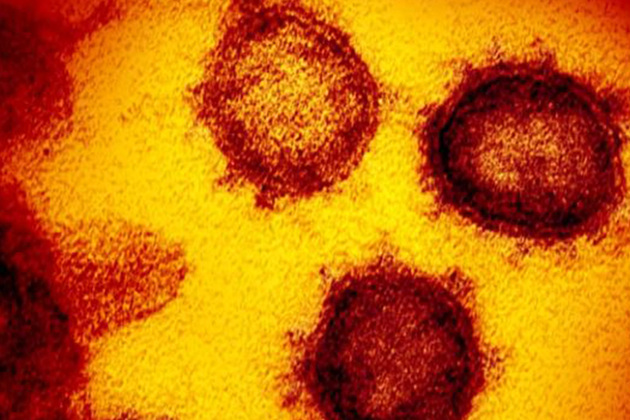
To design the antigen for a universal coronavirus vaccine, the team used all the available genetic sequence data for Sarbeco coronaviruses logged by surveillance programmes around the world.
Using machine learning, they then designed a super antigen containing the antigen features common to this whole group of viruses - including ones that haven't emerged yet.
The study, published in peer-reviewed 'Journal of Infection' which serves as the ifficial publication for the British Infection Association, introduces a 'proactive vaccinology' approach.
Instead of targeting a single known pathogen, the AI-driven platform trains the human immune system to recognize a broad spectrum of viruses, including those that do not yet exist in the human population.
The Cambridge-led team has developed a way to engineer better vaccines that could provide broad protection from thousands of variants of viruses, such as coronaviruses or Ebola, in a single vaccine. This represents a fundamental new vaccine technology that could prevent future pandemics before they begin.
'We've converted vaccine development from being reactive to being future proof. Our vaccines will continue to provide protection against viruses even as they mutate into new strains,' said Jonathan Heeney, from the Lab of Viral Zoonotics, University of Cambridge's Department of Veterinary Medicine, the scientific lead of the research.
He added, 'We've overcome the problem of traditional vaccines, which have limited protection. It means we can escape the constant cycle of chasing the virus variants circulating in humans and updating the vaccines to try to catch up, like a dog chasing its tail.'
The first human clinical trial of the universal Sarbeco coronavirus vaccine, developed by the University of Cambridge and spin-out DIOSynVax (DVX) Ltd, has shown that the vaccine is safe and has no significant side effects.
The trial, involving 39 healthy volunteers between the ages of 18 and 50 years, tested a vaccine designed to provide protection against multiple Sarbeco coronaviruses - the large group of viruses that occur in nature including SARS-CoV-2, which caused the COVID pandemic.
The research has triggered immune responses in the volunteers not only to SARS-CoV-2 and SARS, but to related bat viruses that could potentially jump from animals to humans and cause future pandemics.
Using sophisticated AI modeling, researchers designed a nanoparticle 'scaffold' that acts as a multi-pronged display case for viral proteins.
Unlike traditional vaccines, which usually show the body one 'ID card' of a virus (like the spike protein of SARS-CoV-2), this AI-designed cage allows scientists to 'plug and play' proteins from various different viruses simultaneously.
By using a specialized 'molecular superglue,' the researchers attached various viral antigens to the cage, creating a single, potent shot that teaches the immune system to recognize the common threads shared by an entire viral family.
The researchers explained that 'It's a bit like building a fortress that is prepared for any kind of intruder, rather than just one specific thief,' the researchers explained.
The power of this technology lies in its ability to trigger 'cross-reactive' immunity. In laboratory tests, the AI-optimized vaccine didn't just protect against the viruses included on the cage; it also triggered a robust immune response against related viruses that were not present in the vaccine at all.
This suggests that the vaccine could provide a 'safety net' against 'Disease X'- the placeholder name for the next unknown pathogen that could spark a global crisis.
By moving away from the 'one bug, one drug' model, this technology offers a vision of a future where vaccines are stockpiled long before a spillover event occurs.
'Nature is constantly rolling the dice, waiting for the next mutation to jump from animals to humans,' the authors noted. 'For the first time, we aren't just waiting to see what the dice reveal. We are changing the rules of the game.'
As the world continues to navigate the long tail of the COVID-19 era, this AI-driven holds promise of a future where the word 'pandemic' might finally lose its power to paralyze the planet.
The trials were held at the National Institute for Health and Care Research (NIHR) Clinical Research Facilities in Southampton and Cambridge. The study was sponsored by University Hospital Southampton NHS Foundation Trust (UHSFT). (ANI)
Get a daily dose of Liverpool Star news through our daily email, its complimentary and keeps you fully up to date with world and business news as well.
Publish news of your business, community or sports group, personnel appointments, major event and more by submitting a news release to Liverpool Star.
More InformationDUBAI, U.A.E.: Even as the United States carried out airstrikes on Iran early on June 10, and Iran responded by attacking countries...
DUBAI/BEIRUT: Israel carried out an airstrike on the historic port city of Tyre in southern Lebanon on June 9, killing at least eight...
NANYUKI, Kenya: On June 9, Kenyan police used tear gas to break up protesters in the central town of Nanyuki. The protesters were opposing...
BOSTON, Massachusetts: A federal judge has invalidated a $100,000 fee imposed by President Donald Trump on new H-1B visas, ruling that...
DUBAI/JERUSALEM: Iran and Israel said on June 8 that they had stopped attacking each other after U.S. President Donald Trump urged...
MUZAFFARABAD, PoJK: Clashes in Pakistan-occupied Jammu and Kashmir ahead of a protest planned for June 9 left 11 people dead and more...
SINGAPORE/LONDON: Indonesian President Prabowo Subianto is losing investors' trust, and his plans to grow the economy are at risk as...
PARIS, France: U.S. Defense Secretary Pete Hegseth used a speech marking the anniversary of the D-Day landings to urge European countries...
DARTFORD, England: Amazon introduced a new generation of AI-powered warehouse robot capable of responding to conversational instructions,...
NewsVoir New Delhi [India], June 11: The British School New Delhi welcomed 60 pre-university students from across India for the third...
New Delhi [India], June 11 (ANI): For decades, humanity has played a lethal game of biological catch-up, forever one step behind nature....
New Delhi [India], June 10 (ANI): India on Wednesday summoned Jason Meeks, Charge d'Affaires of the United States, to protest the attack...