The Conversation
11 Aug 2025, 11:53 GMT+10
Share article
Print article
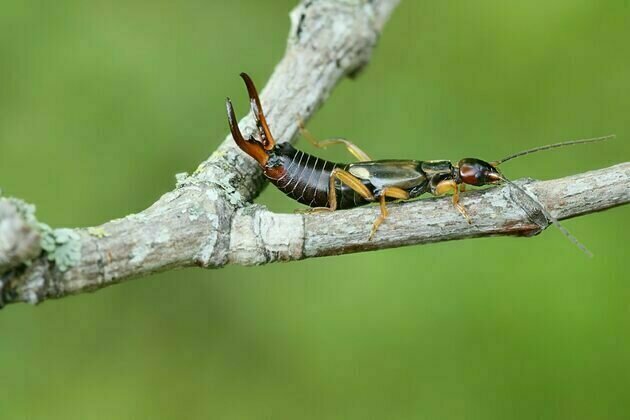
Every morning for the past 32 years, I have been counting earwigs. Here at Marshalls Heath, a small nature reserve in Hertfordshire, the only site where these nocturnal insects have been so systematically monitored for so long, the number of common earwigs has declined dramatically.
Using a light trap (equipment that entices nocturnal flying insects towards an artificial light and into a box until they can be counted and released in the morning), I found 282 earwigs in a single night in 1996. In 2024, only 31 adults were trapped in that entire year.
My new study, published in the Entomologist's Record and Journal of Variation, indicates how this catastrophic decline appears to be due to very late frosts, with much higher numbers in the 1990s linked to runs of sunny, dry summers. I have had other anecdotal reports of declines in numbers in other parts of the UK, so this could be a more widespread phenomenon.
Most gardeners regard earwigs as a pest because they eat some leaves and flower petals. But their favourite foods also include woolly apple aphids, codling moth caterpillars and pear psyllid - these are all tiny insects that feed on apples and pears. In commercial orchards, earwigs are introduced to eat other insects and control apple and pear pests.
Like many insects, earwigs break down waste and decompose dead matter - this improves soil structure and helps create a healthy landscape. They also provide a source of food for some birds and small mammals.
My research shows that the cause of the decline at Marshalls Heath is due to a number of factors. Years of exceptionally high numbers of earwigs were those when summer sunshine had been greatest and rainfall lowest in the two previous years, and when autumns had been cool and the springs dry - weather in the current year had no effect on numbers. But this does not explain their sudden drop in numbers in 2020.
A key part of the puzzle is how adult female earwigs behave towards their young. Unusually for an insect, studies dating back to 1941 have shown that the mother defends and incubates her eggs and cares for her newly-hatched young in an underground nest.
As the young earwigs (called nymphs) grow, they may accompany their mother when she forages at night on the ground outside the nest, always returning back to the underground nest during daylight hours. But as soon as the nymphs moult for the first time, when they are about 5mm long, the mother abandons them to fend for themselves.
Read more: Earwigs are the hero single mothers of the insect world - and good for your garden too
This is a critical stage in the young insect's life, and my new study shows that the earlier the nymphs reach this free-roaming phase, the higher are their chances of survival. A delay of one month can be fatal, since they are vulnerable to disease, starvation and predation by birds and small mammals.
To reach this stage earlier, it appears that the fewer the late spring frosts, the better. In 2011, when nymphs moulted early, there were only eight ground frosts in April and May. In 2021, when adult numbers crashed, there were 32 late frosts, and according to the Met Office, it was the frostiest April since records began.
So what next? Trends over the past four years at Marshalls Heath show adult numbers of between 31 and 47 earwigs per year. In 2025 so far, I have only caught seven adults and nine nymphs.
So there is no sign of any revival in these numbers. However, the hot dry summer this year is just what might favour the survival of these insects in the years to come. If we have a cool autumn and a dry spring, followed by similar conditions next year, I'm hoping to record larger numbers in 2027.
Don't have time to read about climate change as much as you'd like?
Get a weekly roundup in your inbox instead. Every Wednesday, The Conversation's environment editor writes Imagine, a short email that goes a little deeper into just one climate issue. Join the 45,000+ readers who've subscribed so far.
Get a daily dose of Liverpool Star news through our daily email, its complimentary and keeps you fully up to date with world and business news as well.
Publish news of your business, community or sports group, personnel appointments, major event and more by submitting a news release to Liverpool Star.
More InformationIsrael has admitted bombing a tent housing journalists outside the entrance to al-Shifa Hospital in Gaza City, an attack that killed...
WASHINGTON, D.C.: The U.S. Air Force will no longer allow transgender service members with 15 to 18 years of service to retire early,...
TOKYO, Japan: On August 8, relentless downpours lashed Japan's southern island of Kyushu, triggering floods and landslides that drove...
WASHINGTON, D.C.: President Donald Trump announced on August 8 that he will meet Russian President Vladimir Putin in Alaska next week...
SRINAGAR, India: Indian authorities have prohibited 25 books in Kashmir, alleging that they promote false narratives and secessionism...
As scientists and members of the Standing Together for Nutrition Consortium (ST4N) who have been Standing Together For Nutritionduring...
LONDON, U.K.: As the Trump administration ramped up pressure on U.S. colleges to reduce their reliance on international students, while...
LONDON, U.K.: A significant new study from the University of Edinburgh has found genetic differences in people with chronic fatigue...
BELFAST, Northern Ireland: The BBC is facing criticism for failing to pay court-ordered damages to former Sinn Féin president Gerry...
U.S. tariffs isolate its economy, burden consumers, and weaken its global trade influence while others advance. by Xinhua writer...
Share article Print article Every morning for the past 32 years, I have been counting earwigs. Here at Marshalls Heath, a small...
(250811) -- BURNABY, Aug. 11, 2025 (Xinhua) -- A vendor prepares bubble tea for customers during the 2025 Bubble Tea Festival in Burnaby,...